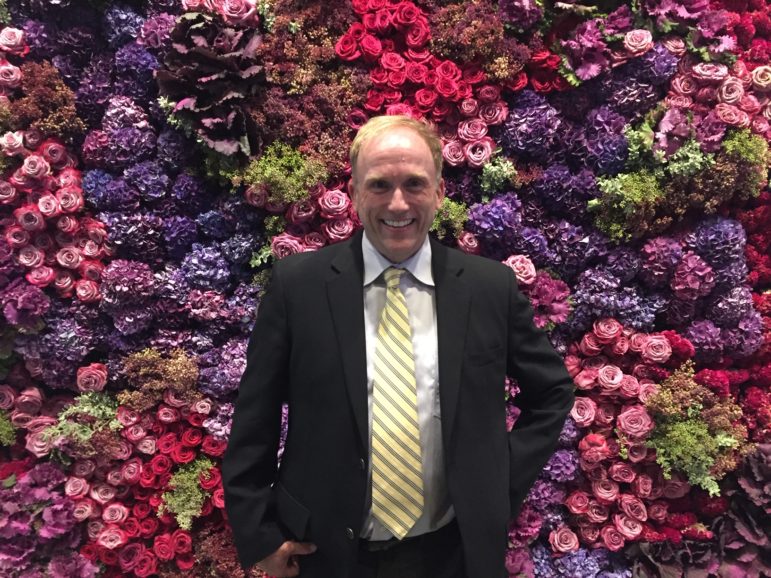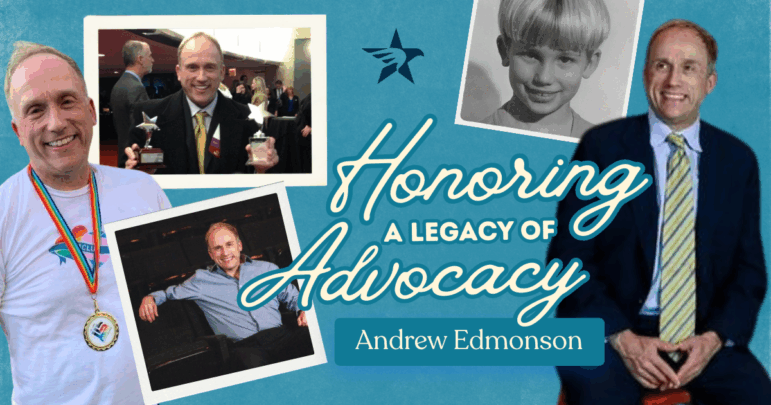
David Andrew Edmonson – known as Andrew, or Andy, to friends and family – was a fierce advocate and “force to be reckoned with,” as his younger sister Sally Edmonson fondly remembers him.
“He was an amazing friend to many folks, a brother, I was thankful to have him as family,” Sally said. “He was a really good, devoted son. He never gave my parents really any hassle, whereas I was kind of the squeaky wheel in the family.”
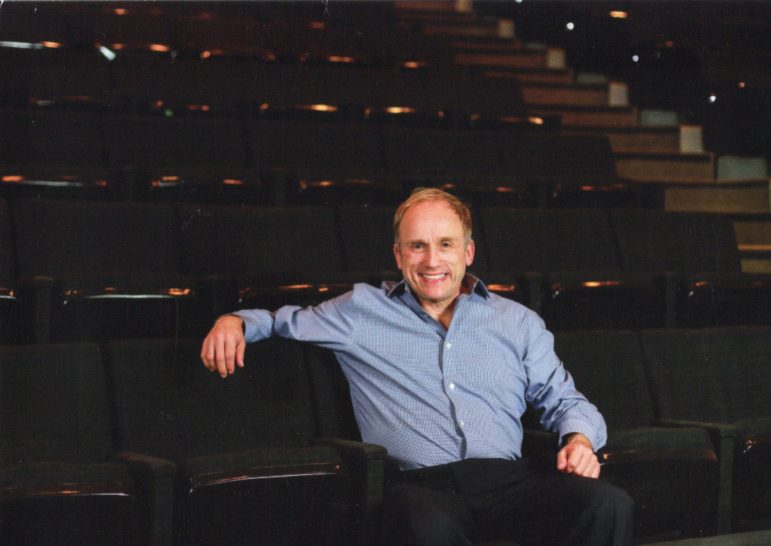
His advocacy went beyond donating to causes and politicians he believed in, but included work at the Montrose Center in Houston – the city’s LGBTQ+ community center – and facilitating AA meetings. Well known throughout the arts and activism community, he built a career spanning from The Alley Theater and the Houston Ballet, before a decade at the Museum of Fine Arts Houston.
“I think that he would be, maybe, humbled or almost embarrassed if we made things too much about him,” Sally said.
But legacy is too important.
Andrew passed away of cancer in May 2025. As part of one final act of generosity, he gifted the Texas Freedom Network $300,000. TFN and its staff are immensely grateful and now only hope to be careful stewards of his goodwill.
“Andrew’s extraordinary generosity to Texas Freedom Network is not just a gift—it is a charge,” Felicia Martin, Executive Director of the Texas Freedom Network, said. “It is an investment in the future he believed in: one where every person can live openly, learn freely, and participate fully in our democracy. We carry that responsibility forward with both humility and determination.”
So even if it would embarrass him, yeah… we’re going to talk about David Andrew Edmonson.
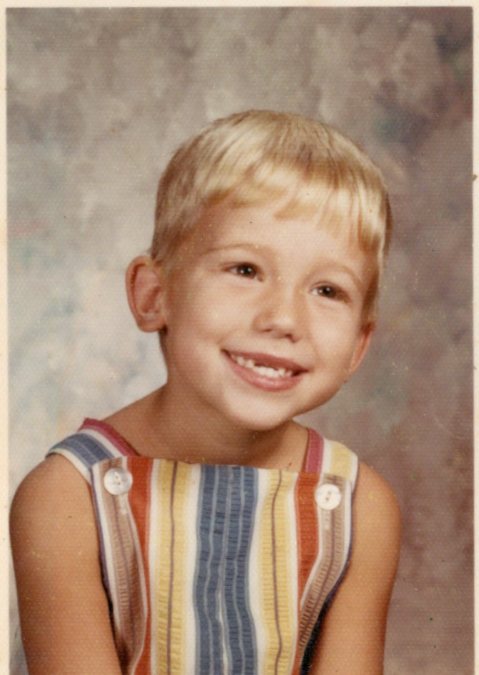
Andrew’s parents were both educators and advocates themselves, a source of great inspiration for him. He grew up in Knoxville, Tennessee before going on to graduate from the University of North Carolina at Chapel Hill. A proud and openly gay man, he left his home in search of a place with a vibrant arts community. A place that would accept him. In 1989, he found a new home in Houston.
“I just couldn’t understand why he wouldn’t come back and be a little closer to family,” Sally said. “But he explained it to me this way… you were not going to move back to Knoxville, Tennessee and be an openly gay man. That just wasn’t going on in the late 80s, whereas nowadays you could live anywhere pretty much authentically.”
Five years at The Alley Theater. Twenty years at the Houston Ballet. And a decade at the Museum of Fine Arts. He also served as chairman of the Houston Gay and Lesbian Film Festival and board member of the American Marketing Association of Houston. Throughout the 90s, he raised money for HIV/AIDS and helped others find sobriety, like he did, through Alcoholics Anonymous.
“As a proud queer woman from Houston, I feel a deep personal connection to Andrew’s legacy,” Martin said. “He represents a generation of leaders who did not wait for permission to live fully or to fight boldly. They built the spaces we now stand in—and they remind us of our responsibility to protect and expand them.”
Martin added that it was clear Andrew understood that living authentically wasn’t just personal, but political.
“He used his voice, his relationships, and his professional talents to open doors, challenge injustice, and amplify those who too often go unheard,” Martin said. “Whether through his work in the arts or his quiet but powerful presence in movements for equality, he helped shape a Houston, and a Texas, that is more vibrant, more inclusive, and more just.”
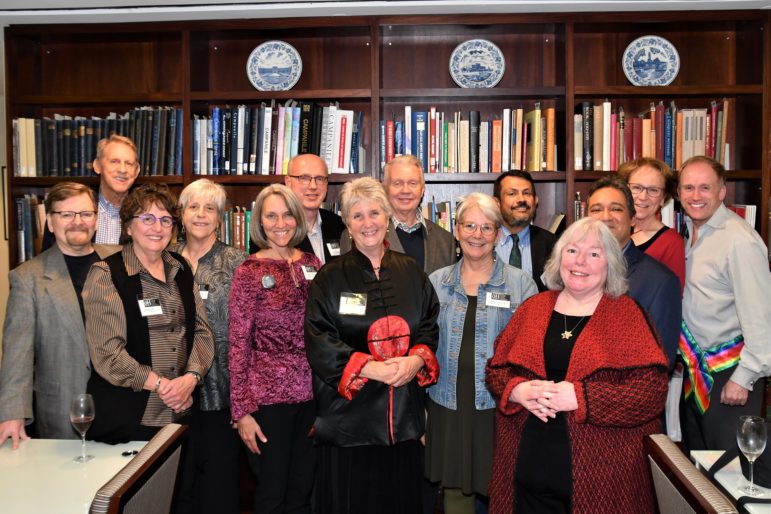
While his sister says Andrew never spoke to her about the gift to TFN, it seems to be a natural extension of the values he lived by. He had watched Texas become a battleground for the very rights he had once had to leave home to find, and it’s clear he believed TFN’s work defending public education, LGBTQIA+ equality, and the freedom to live as you are was worth investing in for the long haul.
Unfortunately, Andrew was diagnosed with throat cancer in the summer of 2024. After a fall in 2025 that required a hip replacement, he faced a series of setbacks. He passed away later that year at the age of 59.
“One of the toughest things for me was we didn’t see how fast his cancer was progressing,” Sally said. “And I wished he had just taken that time off and traveled and just done whatever he wanted. You know, he worked up until probably just several weeks before his passing.”
Sally did some of that traveling for him. In March 2026, she and several of his close friends scattered his ashes in the River Thames in London, a place that meant a lot to him because of its history in the arts.
“It was very beautiful. One of his friends showed up and had brought roses,” Sally said. “I just remember the rough breeze where it carried the ashes away, and you know, there went his spirit.”
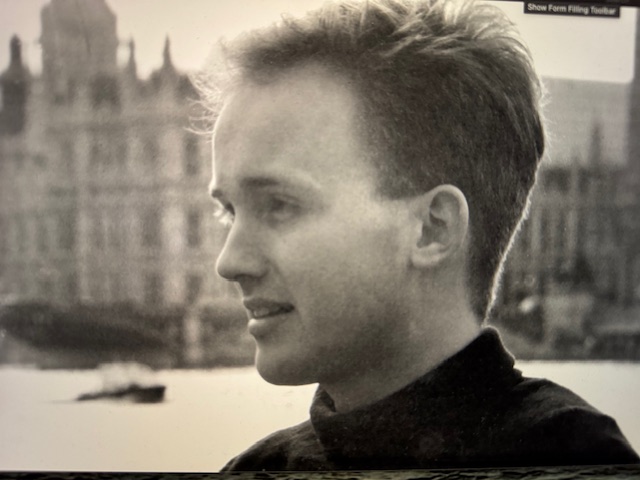
That brings us back to legacy, which Sally says she’s channeled her grief into honoring.
“I reflect on all the lives that he touched in the community,” Sally said. “I’d like to think that it’s not just about him, it’s about the volume of work that has been done… I think it’s about just continuing the momentum and moving forward.”
His legacy is ours to remember too. Rest easy, Andrew. We’ll take it from here.
“We will honor Andrew not only in remembrance, but in action, by continuing to defend public education, advance equality, and build the kind of Texas where the next generation of advocates can thrive, just as he helped so many do,” Martin said. “His legacy lives on in every life he touched, and in the work we will continue, because of him.”
Andrew’s story is a reminder that legacy is something we build across a lifetime, and that it can extend far beyond it. If his commitment to a freer, more just Texas moves you, consider making TFN a part of your own.
A planned gift – through your will, a living trust, or a beneficiary designation – is one of the most powerful ways to ensure this work continues for generations to come. Learn how to include TFN in your estate plans at tfn.org/planned-giving.